Signs Your Trees Need a Tree Care Service Before Hurricane Season in Crestview, FL
Knowing when to call for professional tree care service can mean the difference between a minor trim job and a major emergency after a storm rolls through Okaloosa County. Homeowners in Crestview, FL, face that risk every year. The Atlantic hurricane season runs from June through November, and this area has a long history of high winds, downed trees, and storm-related property damage. Scheduling a tree care service in Crestview, FL, before peak season is one of the most practical steps you can take to protect your home, vehicles, and neighbors.
This article covers the most important warning signs that your trees need attention before the next storm arrives.
Why Crestview Trees Face Serious Hurricane Risk
Crestview sits in the Florida Panhandle, in Okaloosa County, where storms can strengthen quickly over the Gulf of Mexico before making landfall nearby. Past severe weather events have sent massive trees through rooftops in neighborhoods south of Interstate 10 and along State Road 85. The area's sandy soil, summer heat, and wet-dry weather cycles stress trees year-round. That stress leaves them more vulnerable to wind damage when hurricane season peaks in August and September.
A pre-season inspection from a qualified tree care service can reveal problems the untrained eye would miss.
Visible Rot, Fungal Growth, or Disease Spots
List of services
-
Dead or Dying Branches OverheadList Item 1
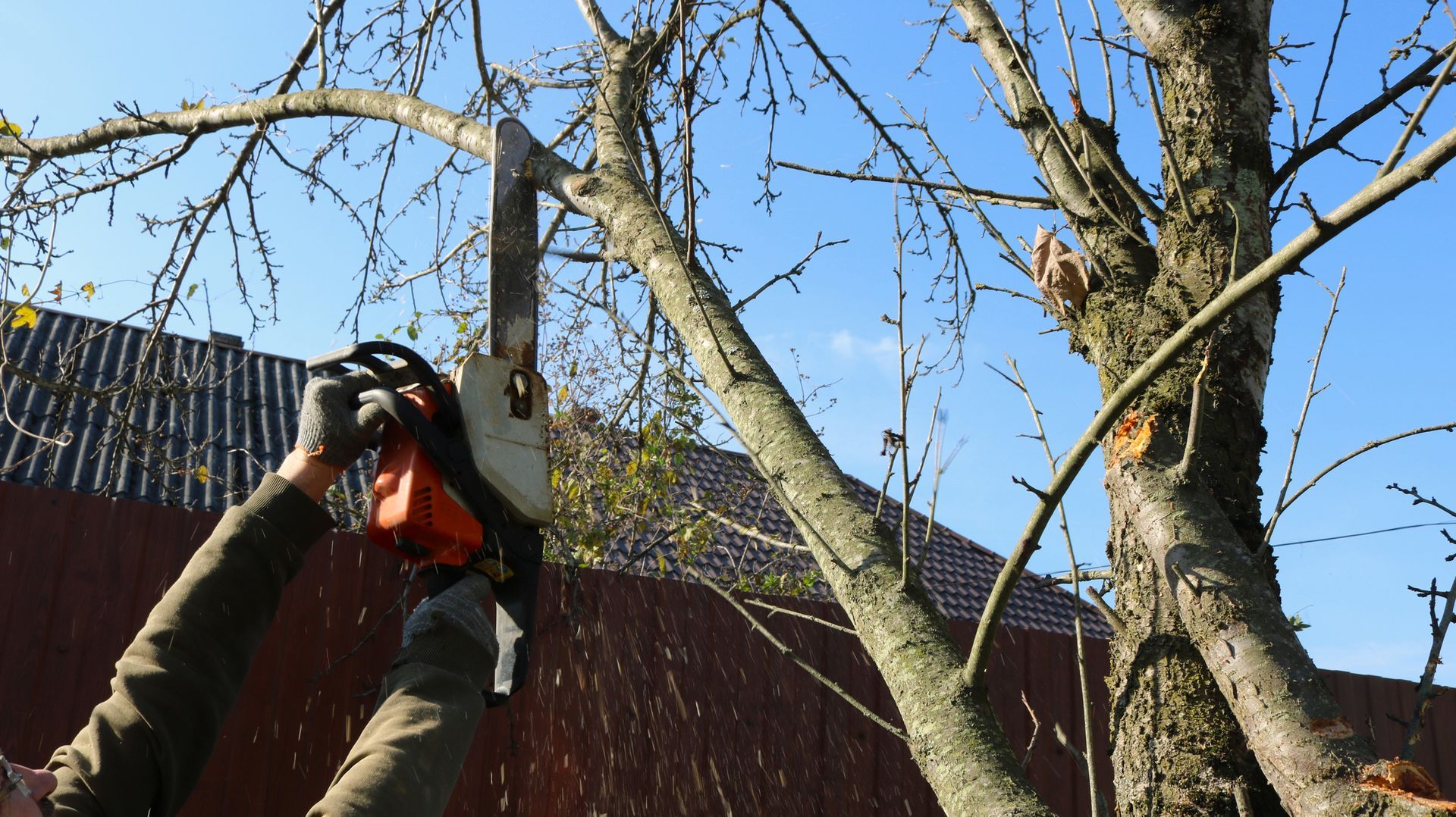
Dead branches are one of the clearest signs a tree needs professional attention. When a branch loses its bark, snaps without bending, or produces no new leaves in spring, it may already be dead and could fall during the first strong wind gust.
In Crestview yards, laurel oaks and water oaks are especially common and among the species least resistant to hurricane-force winds. University of Florida research found that these trees fell in greater numbers than most other species during Florida Panhandle hurricanes. A certified arborist can identify and remove problem branches safely before storm season.
-
A Leaning or Shifting TrunkList Item 2
A leaning trunk can indicate a compromised root system. If the soil is heaving up on one side, cracking around the base, or if the lean is recent and sudden, the tree may be at risk of uprooting entirely in high winds.
Heavy rain and soil saturation during Crestview's frequent summer storms can weaken root systems. Trees in low-lying areas near Shoal River or in neighborhoods with poorly draining soils are especially prone to this kind of root failure. Do not ignore a new lean. It warrants a professional evaluation before conditions worsen.
-
Visible Rot, Fungal Growth, or Disease SpotsList Item 3
Soft wood, hollow cavities, mushroom growth at the base, or dark, discolored patches on the bark are often signs of internal decay. A tree can look healthy from the outside while the trunk interior is compromised.
Sand pine and laurel oak do not compartmentalize decay well, meaning trunk injuries and root damage can lead to hollow areas that are hard to detect without a professional inspection. Fungal conks growing at or near the base are a strong indicator that something is wrong inside the wood. A tree in that condition can be structurally unsafe well before any storm arrives.
-
Overcrowded or Crossing BranchesList Item 4
A canopy packed with crossing or rubbing branches creates friction wounds that invite disease and insects. A dense canopy also traps wind instead of letting it pass through, which puts more pressure on the trunk and root system during a storm.
Proper crown thinning before hurricane season allows wind to move through the canopy more freely. This is especially important for the large slash pines and longleaf pines throughout northern Crestview near Antioch Road and around Baker. These species can perform better in storms when properly maintained, but still benefit from professional trimming to remove weak growth.
-
Root Damage or Pavement Heaving Near the Base
Surface roots pushing up sidewalks, driveways, or soil near a tree's base may signal root stress. Roots cut by construction, driveway work, or utility line installation may no longer anchor the tree properly.
A tree with significant root damage may stand firm on a calm day and still fail in sustained winds. In Crestview's residential areas, this is a common but overlooked risk, especially near older properties where large oaks have grown alongside hardscaping. A tree care service assessment can determine whether the root system is still sound enough to keep the tree standing.
When Should I Get a Tree Inspection Before Hurricane Season?
The best time to schedule a pre-hurricane tree inspection in Crestview, FL, is between March and May. This window gives homeowners time to complete any trimming, removal, or cabling work before the Atlantic storm season officially begins in June. Scheduling early also helps you avoid the rush that follows storm warnings, when many tree care service providers are already fully booked.
Which Local Tree Species Are Most Vulnerable to Storm Damage?
According to University of Florida research on Florida Panhandle hurricanes, laurel oak, water oak, sand pine, and pecan tend to have lower wind resistance than live oak, sabal palm, longleaf pine, or southern magnolia. Older laurel oaks or water oaks near your home or power lines deserve priority attention before storm season.
Get a Professional Assessment Before the Season Hits
Waiting until a hurricane watch is posted is too late to safely address tree hazards. Professional tree care service can address the warning signs above while there is still time to do the work safely and correctly.
Diven Tree Services offers pre-season tree inspections, professional trimming, hazardous tree removal, and emergency services for residential and commercial properties. The team works throughout Crestview and the surrounding areas of Okaloosa County. With over 35 years of experience and an owner on site for every job, the team is equipped to identify what others may miss.
To request a free quote or schedule an inspection, contact us here<https://www.diventreeservices.com/contact-us> or visit the
tree care services
page to learn more. You can also call
(850) 217-4165 to speak directly with the team. Find
Diven Tree Services on Google Maps to check hours and directions.